
Simple Ways to Reduce Microplastics in Your Kitchen
Everyday kitchen staples, including plastic cutting boards, worn nonstick pans, microwaved plastic containers, and tea bags, can shed millions of microplastic particles into your food and drinks. In some cases, lab studies have measured those numbers in the billions.
Where they come from
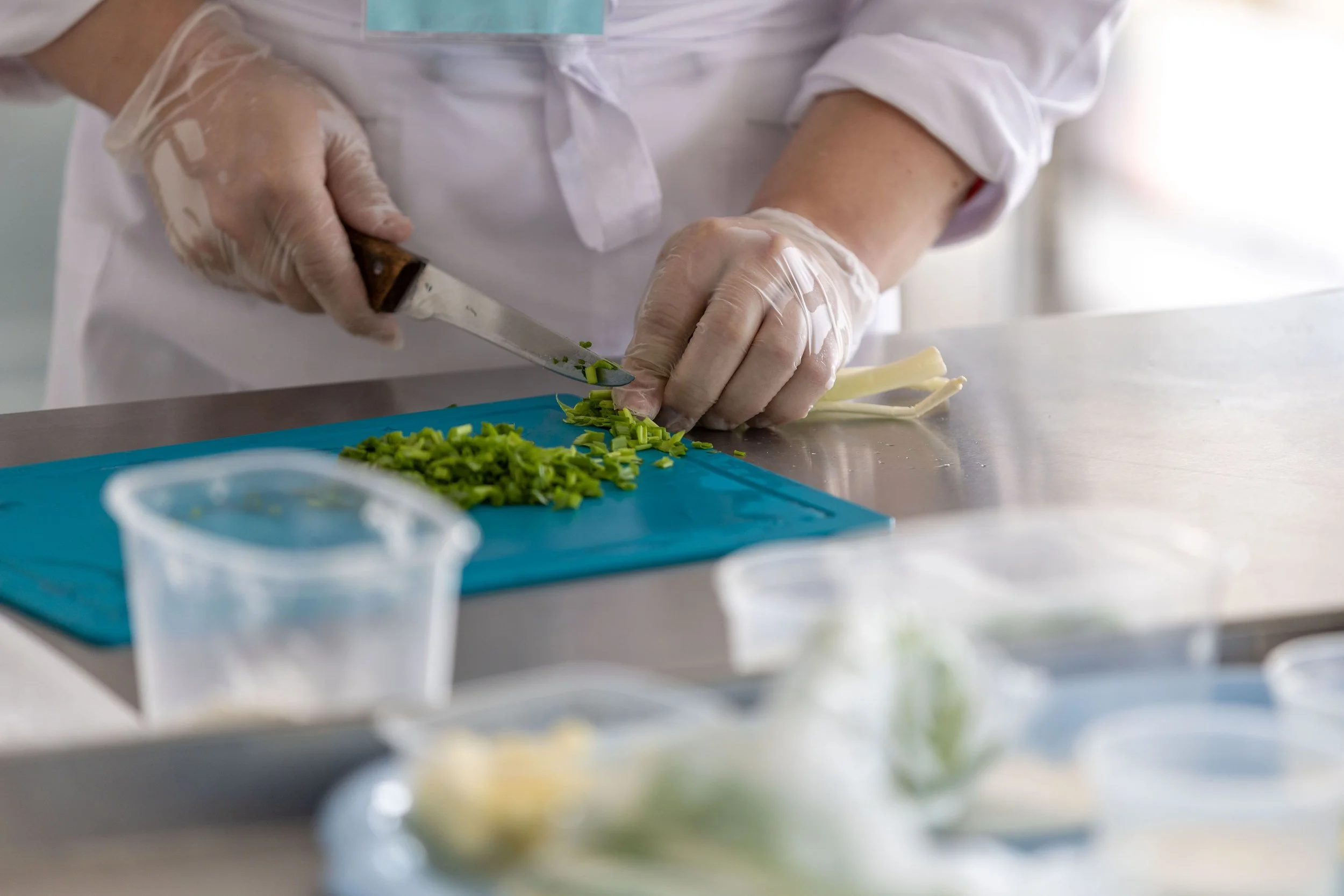
Cutting boards. Chop carrots on a plastic board and the knife leaves marks, and those marks are where the plastic comes from. A 2023 North Dakota State University study[1] estimated that a polyethylene board could shed 14 to 71 million microplastics a year, and a polypropylene board about 79 million. Wood boards shed particles too, but wood isn’t plastic. The team also ran a quick test on mouse cells and saw no significant effect, so for now this is about exposure, not proven harm.
Nonstick pans. Most nonstick coatings are PTFE (Teflon), which is also a PFAS. Researchers at the University of Newcastle in Australia[2] estimated that a single crack in the coating could release about 9,100 particles during cooking, and a badly damaged coating roughly 2.3 million. That came from a simulated cooking test, so real kitchens will vary.
Microwaving plastic. University of Nebraska-Lincoln researchers[3] microwaved plastic baby food containers at full power for three minutes. In some cases, every square centimeter of container shed more than 2 billion nanoplastics and 4 million microplastics.
Plastic tea bags. Some of the fancier “silken” bags are made of nylon or PET. A McGill University team[4] steeped them at 95°C and found roughly 11.6 billion microplastics and 3.1 billion nanoplastics in a single cup.
How to cut down
Switch to a wood or bamboo cutting board to avoid shedding plastic into your food. If you still use a plastic one, toss it once it gets covered in deep knife grooves.
Never microwave food in plastic containers. Transfer leftovers to a glass or ceramic bowl before heating them up.
Choose loose-leaf tea or unbleached paper tea bags whenever you can. Check the label carefully, since silky mesh bags are usually made of nylon or PET plastic.
Use a quality home water filter to catch microplastics in your tap water. Just remember to replace the filter cartridges on schedule so they keep working properly.
As consumers grow increasingly concerned about microplastic exposure, more brands are prioritizing product safety and turning to independent laboratory testing. PolyGone helps consumer brands accurately measure microplastic levels in products ranging from tea bags to drip coffee makers, and offers certification for items with no microplastics detected.
Partner with PolyGone to verify your product safety and earn consumer trust. Request a quote today.
References
Yadav, H., et al. (2023). Cutting boards: An overlooked source of microplastics in human food? Environmental Science & Technology, 57(22). https://doi.org/10.1021/acs.est.3c00924
Luo, Y., et al. (2022). Raman imaging for the identification of Teflon microplastics and nanoplastics released from non-stick cookware. Science of the Total Environment. https://doi.org/10.1016/j.scitotenv.2022.158293
Hussain, K. A., et al. (2023). Assessing the release of microplastics and nanoplastics from plastic containers and reusable food pouches: Implications for human health. Environmental Science & Technology, 57(26). https://pubs.acs.org/esthag/article-abstract/57/26/9782/316425/Assessing-the-Release-of-Microplastics-and
Hernandez, L. M., et al. (2019). Plastic teabags release billions of microparticles and nanoparticles into tea. Environmental Science & Technology, 53(21), 12300–12310. https://doi.org/10.1021/acs.est.9b02540
Look around your kitchen and you’ll find plastic everywhere, from the cutting board, nonstick pans to plastic packaging for your daily food and drinks. Researchers have found a staggering number of microplastic particles shed from these items. Scientists are still not sure how they will affect our health, but cutting down your exposure is easy to start.